Do Cocker Spaniels Shed? A Breeder’s Unvarnished Answer
Yes. Anyone who tells you otherwise is selling a fantasy, not a dog.
As a breeder who is constantly in touch with vets for 8 years, and a lifelong Cocker owner, I can state this unequivocally. Cocker Spaniels shed moderately all year, with two major coat ‘blows’ in spring and autumn that can test the resolve of the most dedicated owner. If you’re looking for a low-shed breed, this is not it.
What I can offer is a realistic guide to why it happens, how to anticipate it, and the clinical and grooming strategies I use in my own practice to keep it from taking over your life and home.
The Direct Answer: Quantifying “Moderate Shedding” in a Real Home
“Moderate” is the textbook answer, but it’s functionally useless. Here is what it means in my house, with my own English Cockers, Woody and Wilma.
It means if Woody and Wilma sleep on the bed, the duvet cover needs a lint roller every morning. It means my dark work trousers are covered in fine hairs the moment I greet him. The limestone flagstones in my Brighton kitchen need a daily sweep to stop fine, fluffy undercoat from gathering in the corners. This isn’t failure; it’s the price of admission.
What it is not is the blizzard of coarse hair you’d see from a German Shepherd. The shed is entirely manageable with the right protocol. Without a protocol, you are simply curating a museum of dog hair.
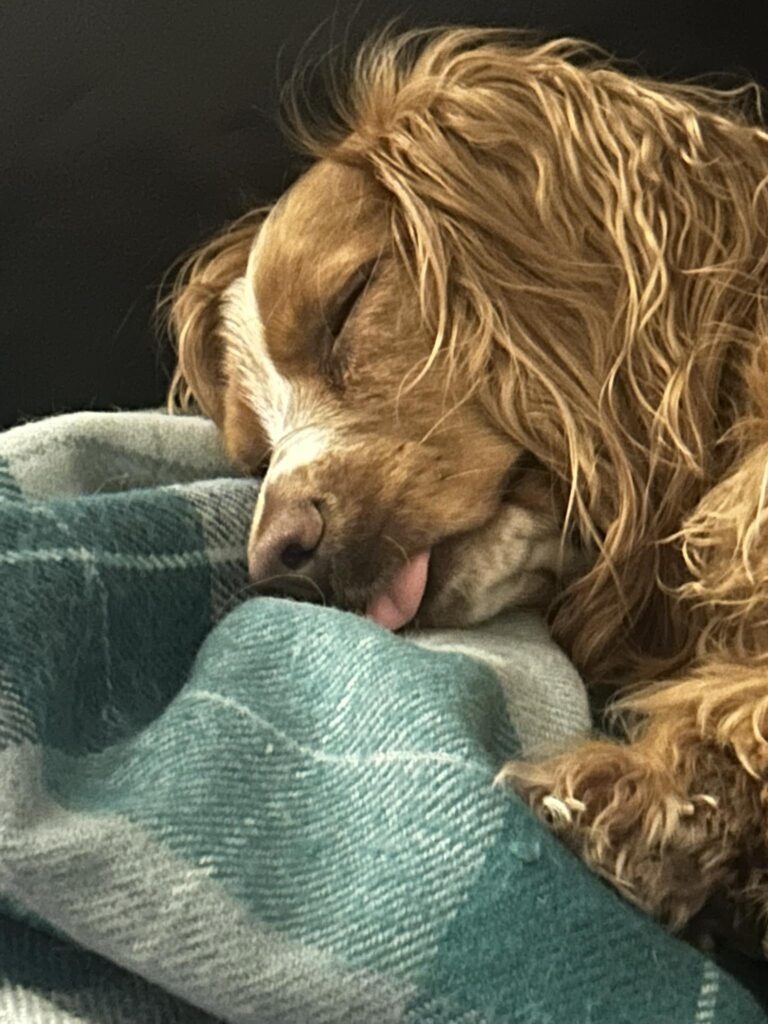
On a scale of 1 (a hairless Xolo) to 10 (a Malamute in May), a well-maintained Cocker is a 4–5 for most of the year. During the spring and autumn coat blows, that number climbs to a 6–7. That is the reality.
English vs. American Cockers Shedding: A Critical Distinction for Spaniel Owners
Most online guides treat the “Cocker Spaniel” as a single entity. From a coat management perspective, this is a significant error.
English Cocker Spaniels, the more common type you’ll see on a walk through the British countryside, have a flatter, silkier coat. The feathering is more moderate. In my experience, the shed is predictable and the coat is slightly more robust between professional grooms. The working (or field-line) English Cocker, bred for resilience in thick cover, often has a much sparser, more practical coat that sheds even less.
American Cocker Spaniels are a different proposition. Their coats are profuse, the undercoat is denser, and the feathering is dramatic. Show-line Americans, in particular, carry a truly astonishing volume of hair. Their grooming needs are substantially higher, and my friends with Americans consistently report more visible shedding at home.
If the time and cost of grooming are a real factor in your decision, the English Cocker is the more pragmatic choice for most families. Neither is a “low-shed” dog. But the day-to-day difference is tangible.
The Biology of the Coat: Why Your Spaniel Sheds
Your Cocker has a double coat: a dense, soft undercoat for insulation and a glossier topcoat of guard hairs. Every hair follicles cycles through four distinct phases: anagen (growth), catagen (transition), telogen (rest), and exogen (shedding).
The fine, downy hair you find everywhere is the undercoat, which has a faster turnover. Twice a year, the changing daylight hours trigger a hormonal signal for a mass shed of this layer. We call it “blowing the coat.” It’s a four-to-six-week event each time and is a sign of a healthy, functioning endocrine system, not a problem to be solved.
My Seasonal Shedding Calendar
| Period | What’s Happening in the Coat | Shedding Level | My Key Recommendation |
|---|---|---|---|
| January – February | Full winter coat is set | Low–Moderate | Weekly brushing is sufficient. |
| March – May | Spring coat blow begins | High | Brush daily. Book your groomer now for a de-shed. |
| June – August | Stable summer coat | Low–Moderate | Brush every 2–3 days, check for grass seeds post-walk. |
| September – November | Autumn coat blow begins | High | Resume daily brushing. Book the second de-shed. |
| December | Winter coat building | Low–Moderate | Weekly brushing, monitor for damp-related mats. |
The spring shed is almost always the more dramatic event, especially for dogs who spend a lot of time outdoors.
Six Factors That Dictate Shedding Volume: A Breeder + Vet’s Perspective
1. Diet — The Foundation of Coat Health
A coat is built from protein and fat. Diets low in essential fatty acids create brittle, dry hair that sheds prematurely. This is the single most common cause of non-seasonal “excessive” shedding.
Fish oil supplementation is not a fad. I recommend an anchovy or salmon oil providing around 20mg of combined EPA/DHA per kilogram of body weight. It’s a clinical intervention with strong evidence behind it. Feeding a cheap, grain-heavy kibble is a direct route to a problematic coat.
2. Hydration Status
Dehydration leads to dry skin and poor hair follicle anchorage. A 10kg Cocker needs about 400–600ml of water daily. Many simply don’t drink enough. A splash of low-sodium chicken or bone broth in their water bowl is a simple compliance trick that works for most of the time.
3. Neutering and Spaying — The Post-Op Coat Change
This is a very real phenomenon that is under-discussed. The removal of sex hormones during gonadectomy frequently alters coat texture, often resulting in a softer, fluffier, and more shed-prone “puppy coat” that persists for life.
If your neutered Cocker seems to shed more than the breed standard, this is a highly probable cause. It’s not a pathology, but it does mean your brushing commitment will be higher than for an intact dog.
4. Stress and Cortisol
I see this often after a kennel stay, a house move, or the arrival of a new baby. Elevated cortisol can trigger a diffuse, rapid hair loss called telogen effluvium. It’s a physiological response to stress. If shedding suddenly spikes, and it isn’t spring or autumn, review the dog’s social and environmental situation.
5. Underlying Health Conditions
Abnormal shedding is a key clinical sign for several diseases. A good vet knows how to distinguish it from a normal coat blow.
6. Breeding and Lineage
Genetics are paramount. Show-line Cockers are purpose-bred for coat volume. A working Cocker from hardy field trial lines will have a tighter, shorter coat that sheds and mats less. When you speak to a breeder, asking “Are these show or working lines?” is one of the most important questions you can ask.
The Grooming Protocol I Compiled with Our Vet’s Guidance

“Brush them” is not useful advice. This is the specific toolkit and schedule I give to new Cocker owners.
The Essential Toolkit
Flexible-head slicker brush: For the topcoat. The flexible head prevents skin irritation. Brush with the coat, not against it.
Undercoat rake (dual-row): This is for the undercoat the slicker can’t reach. Use it 2-3 times a week on the chest, ruff, and flanks where the dead coat builds up.
Dematting comb: For the high-friction areas: armpits, behind the ears, groin. Use this before a bath. Water makes mats tighten like concrete.
Hydrating de-shedding shampoo and conditioner: The shampoo helps release dead hair. The conditioner is vital to restore moisture and protect the hair shaft. Skipping it makes shedding worse long-term.
The Brushing Schedule
- Stable months: Every 2–3 days is a realistic minimum.
- Coat blow seasons: Daily. It’s not optional.
- After a wet, muddy walk: Towel dry, then brush before the coat dries completely. This prevents the mud from cementing mats into the fur.
The Role of a Professional Groomer
I always suggest to budget for a professional groom every 6–8 weeks, specifically requesting a de-shedding service. This involves high-velocity dryers that blast out dead undercoat far more effectively than any home brushing. One session can remove a startling volume of hair.
Annual Cost Estimate (UK):
| Item | Frequency | Typical Cost | Annual Total |
|---|---|---|---|
| Professional groom with de-shed | 6-8 times/year | £55–£75 | £360–£650 |
| De-shedding shampoo/conditioner | Bimonthly | £15 per set | £90 |
| Quality brushes/rake | Replace every 2-3 years | £50 set | £25 amortised |
| Pet-specific vacuum | Replace every 5-7 years | £350 (e.g., Miele/Dyson) | £50-£70 amortised |
This budget is part of responsible Cocker ownership. If these figures are alarming, it is better to know now.
Containing the Inevitable: Hair Management in Your Home
You will not stop the shed. You can only manage the collection.
Daily vacuuming during coat blows is essential. The fine, light hair of a Cocker is best handled by vacuums with strong suction and a powered brush head. In my experience, models from the Miele Cat & Dog or Dyson Animal series are worth the investment.
Hard floors are your friend. The hair clumps visibly and can be gathered easily. Carpet traps it.
Use washable throws on sofas and chairs. A tight-weave cotton or microfibre throw is far easier to de-hair than a tweed or velvet sofa.
Invest in a HEPA air purifier. This won’t trap much hair, but it will capture the microscopic dander that the hair carries, which is the primary trigger for allergies.
When Shedding is a Clinical Red Flag?
As a breeder, I look for patterns. Normal shedding is diffuse. Pathological hair loss often isn’t.
Book an appointment with your vet immediately if you see:
- Symmetrical hair loss on the flanks: This is a classic sign of hormonal issues, including Cushing’s disease or thyroid dysfunction.
- Circular bald patches, often crusty: Highly suspicious for ringworm (a fungus) or certain types of mange.
- “Elephant skin”: Hair loss accompanied by thickened, dark, greasy skin points toward chronic conditions like hypothyroidism, very common in spaniels.
- Hair loss with increased thirst/urination: This combination is a significant red flag for endocrine disease.
- Sudden, severe hair loss with intense itching and skin inflammation: This suggests a severe allergic reaction or secondary infection that needs immediate attention.
If you can see bald skin, it’s a clinical issue, not a grooming one. Get it diagnosed.
The Hypoallergenic Question, Settled
Cocker Spaniels are not hypoallergenic.
The primary allergen, Can f 1, is a protein found in saliva and skin glands. Hair is simply the delivery vehicle. Low-shedding breeds like Poodles release less of this allergen into the air, but no dog is allergen-free.
Because they shed moderately and have a dense undercoat, Cockers are a higher-risk choice for homes with known dog allergies. It is possible to mitigate exposure with HEPA filters, frequent bathing, and keeping the dog out of bedrooms, but it’s a significant management task.
Breed Shedding Comparison: A Practical Chart
| Breed | Shedding Level | Grooming Demand | Dander Output |
|---|---|---|---|
| English Cocker Spaniel | Moderate | High | Moderate |
| American Cocker Spaniel | Moderate–High | Very High | Moderate |
| Cavalier King Charles | Moderate | Moderate | Moderate |
| Cockapoo (F1 generation) | Low–Moderate | Moderate–High | Low–Moderate |
The key takeaway here is that shedding and grooming are not the same. A Labrador sheds more than a Cocker but has a fraction of the grooming needs. The Cocker coat demands work to prevent matting, separate from managing the shed hair.
Final Verdict
Do Cocker Spaniels shed? Yes. Significantly. They require a real commitment to diet, grooming, and cleaning.
But are they worth it? They are one of the most biddable, intelligent, and deeply affectionate breeds I have the pleasure of working with. The fur is the tax you pay for the companionship.
After two decades in this job and three Cockers of my own, I can tell you the tax is well worth paying.